


5 Tramuntana Hikes in Mallorca from Scenic Walks to Expert Mountain Routes
A practical guide to five Serra de Tramuntana hikes — from scenic walks to serious mountain routes,
The Serra de Tramuntana isn’t just Mallorca’s “mountain backdrop” — it’s a UNESCO World Heritage landscape defined by an unusually diverse mix of terrain: limestone ridges, hidden coves, olive terraces, and old stone paths that can feel smooth one moment and rough the next.
It’s wildly rewarding, but it also demands realistic planning: awareness of weather, thoughtful route choice, and honest decisions about what fits your day and your abilities.
Below are five Tramuntana hikes, curated by difficulty — from relaxed scenic walks to expert-only days where navigation and conditions truly matter.
This isn’t a list of the “most famous” routes. Instead, the focus is simple: great terrain, a rewarding experience, and the right hike for the right person.
What makes the Tramuntana special (and different)
Terrain changes quickly. A path can feel like a comfortable track for twenty minutes — and then become rocky, steep, and slow. Your pace is rarely consistent.
Exposure is real. Even on non-technical routes, you may be walking above drops, in strong wind, or on uneven rock. If you’re not comfortable with heights, choose routes that stay lower and wider.
Wayfinding is part of the experience. Some trails are beautifully clear. Others rely on cairns, faint path lines, and good judgement. Even on easier hikes you may occasionally encounter a short hands-on scramble (easy, but worth expecting).
Weather changes with altitude. It can be calm and warm at the coast while the ridge is windy, colder, or in cloud. Plan for “two climates”: the trailhead and the summit.
Seasonal considerations (what to watch for)
Spring (March–May): Often the best balance of temperatures and visibility — but don’t underestimate wind and sudden showers. Trails can be slippery after rain, especially on polished limestone.
Summer (June–September): Heat becomes the main risk factor. Start early, pick shorter routes, and avoid exposed ridges mid-day. Water planning is essential — there is usually no reliable drinking-water supply on the trail.
Autumn (October–November): Can be fantastic, but it’s also the season of unstable weather. Heavy rain and local flooding are common in November — check forecast details, not just an icon, and be cautious with gullies and torrents.
Winter (December–February): Tramuntana can be surprisingly cold and windy. Temperatures can drop below 0°C, and shaded sections can hold ice after clear nights. Short daylight matters — and if you drive into the mountains, check your tires (rental cars often come with summer tires).
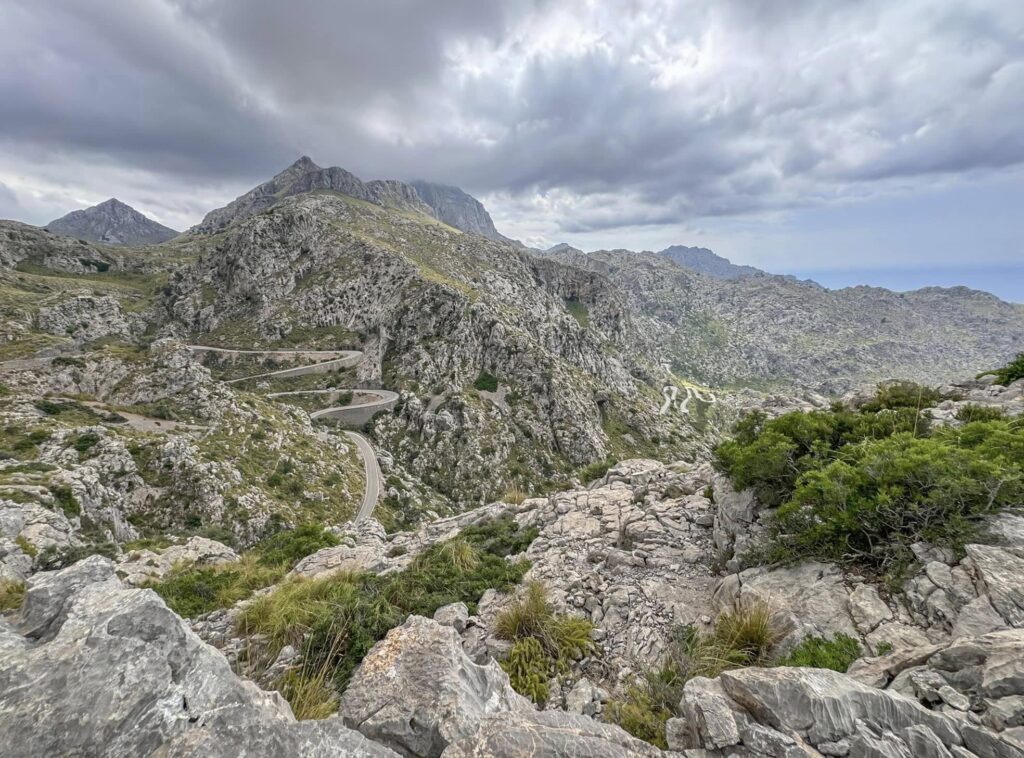
5 curated Tramuntana hikes by difficulty
1) Easy / Low-commitment: Scenic classics with minimal commitment
Best for: first-time visitors, relaxed walkers, families with older kids
What to expect: clear paths, usually good surface quality, and a straightforward payoff
Key logistics: short duration; still bring sun protection and enough water
If you want Tramuntana atmosphere without committing to big mountain terrain, start with short, well-trodden routes that deliver views quickly. Good examples are Puig de Maria (short, steep-ish but on a clear path) or the Boquer Valley (easy navigation with dramatic scenery).
Why this works: it’s a high “scenery-per-effort” ratio and a great first step before you go deeper into the mountains.
Tip: even “easy” hikes can feel hot in calm weather. In summer, this is still an early-start route.
2) Moderate: Classic hilltops and viewpoints (a real Tramuntana “day hike”)
Best for: regular walkers, anyone who wants a “proper hike” without big risk
What to expect: stone paths, some rocky sections, and a viewpoint payoff
Key logistics: allow extra time for uneven ground; use a digital map + GPX (downloaded in advance)
This is the kind of hike that teaches you the Tramuntana rhythm: steady climbing, mixed terrain, and then a viewpoint that makes you forget the effort.
Moderate doesn’t mean “flat.” It means the route is manageable if you pace yourself and plan realistically.
Examples in this category include Puig Fumat, Penyal d’Honor, and Castell d’Alaró — all rewarding, but clearly more of a hike than a casual walk.
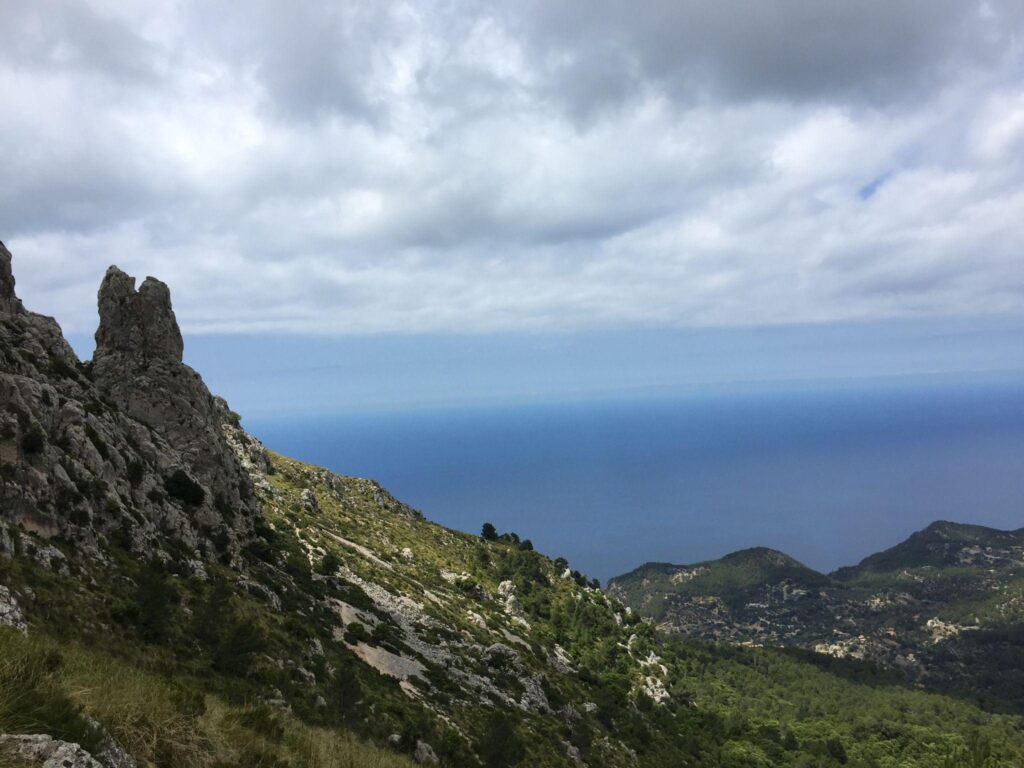
3) Challenging: Summit days where rough ground and exposure become factors
Best for: fit hikers comfortable on rough ground
What to expect: steep sections, rocky ridges, and wind as a factor
Key logistics: bring a light layer even on warm days; don’t ignore gusts
This is where Tramuntana starts to feel properly mountainous: steeper gradients, rough limestone underfoot, and sections that slow you down. On some routes you may also encounter short, easy hands-on steps (more “scramble” than climb) — worth expecting even if the day is not technical.
Examples include Galatzó and Tossals Verds — iconic routes and bigger days where stamina and navigation discipline matter.
Decision point: if cloud sits on the ridge early and visibility is already poor, it often stays that way higher up. A smart hiker turns a “summit day” into a “great day out” by choosing a lower, shorter, or clearer alternative.
Gear baseline: good grip, one extra layer, enough water, and a downloaded route on your phone or navigation device (GPX + map).
4) Very challenging: Long, remote-feeling routes (navigation + commitment)
Best for: experienced hikers who can stay calm if the trail fades
What to expect: fewer people, sections where the line isn’t obvious, and a long day
Key logistics: start early; set a turnaround time; carry a simple Plan B
This is the Tramuntana experience many people dream of: ridgelines, big views, and that feeling of being “away from everything.” But it comes with commitment. Download your GPX and maps before you start, and keep a simple Plan B for timing or weather changes.
Examples include Sa Rateta, Massanella, or Tomir — gorgeous summit routes, but they require solid fitness and a calm, conservative mindset in changing conditions.
The key skill here isn’t bravery — it’s judgement: knowing when to slow down, check your track, and keep your day within daylight.
Practical rule: set a turnaround time before you start. If you hit it without being where you expected to be, turn around — no drama.
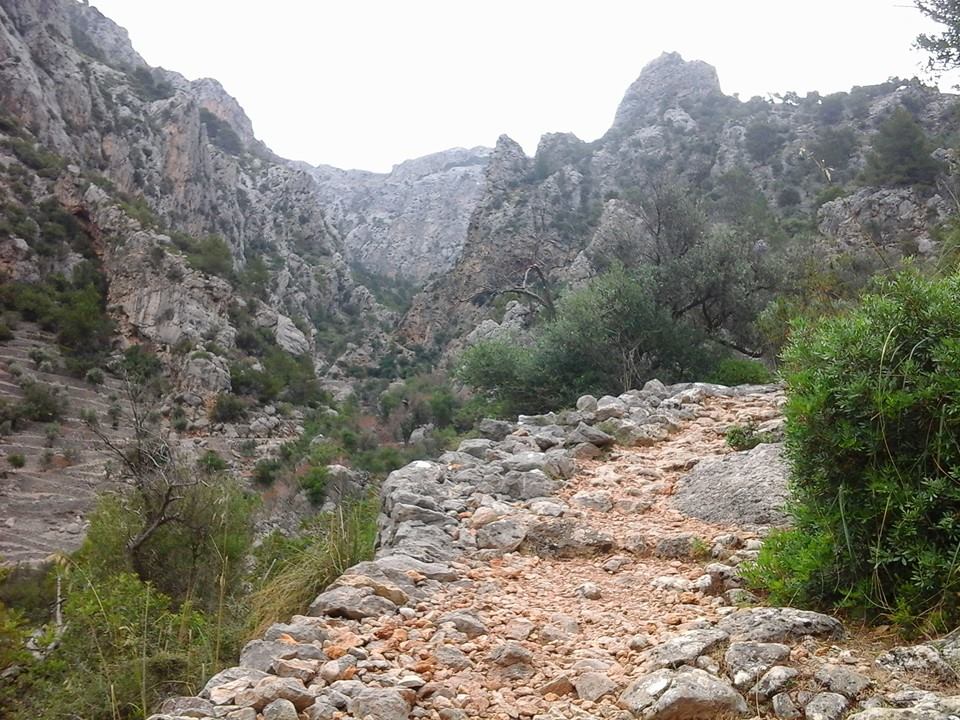
5) Expert-only: Serious terrain, serious consequences (only in stable conditions)
Best for: expert hikers with strong route judgement and comfort with exposure, rough ground, and steep climbs
What to expect: steep, exposed sections; slow progress; “no mistakes” terrain
Key logistics: stable weather only; avoid after rain; don’t go solo if unsure
Tramuntana has routes that may look “doable” on paper but demand a high level of experience in reality. The challenge isn’t always technical climbing — it’s the combination of exposure, loose rock, route ambiguity, and fatigue.
Example: Torrent de Pareis — spectacular, but absolutely not a casual hike and only suitable when conditions are dry and your plan is solid.
This is not the day to prove something. It’s the day to be conservative. If wind, cloud, or wet rock is part of the forecast, choose a different route. Mallorca will still be here tomorrow.
A short, non-alarmist safety note (when to choose the easier option)
Here’s a simple filter that helps keep you safe without removing the fun:
• If wind is strong on the ridge, choose a lower hike.
• If cloud sits on the mountain, visibility and navigation degrade quickly.
• If the rock is wet, limestone becomes slick — slower, unpleasant, and riskier.
• If daylight is running short, choose a shorter route.
• If you feel slightly unsure at the start, that feeling rarely improves later.
The Tramuntana rewards people who plan well and decide early.
Want the route details, GPX tracks, and honest difficulty notes?
Jörn von Grabe documents Tramuntana hikes with practical navigation notes and realistic difficulty assessments — helping hikers explore independently while staying well prepared with digital maps, GPX tracks, and clear expectations.
Read also: Mallorca Hiking Navigation, a Practical safety Guide for the Serra de Tramuntana
For travelers seeking a more curated experience, private hikes and tailor-made mountain journeys Mallorca Touren offers some of Mallorca’s best hikes — complete with GPX routes, live tracking, and interactive maps designed to make exploring the island effortless. Every route is personally tested and curated, allowing travelers to focus on nature, movement, and the spectacular views along the way.
Author

Latest from the Blog



Latest Accommodations


Latest Experiences





Leave a Reply